

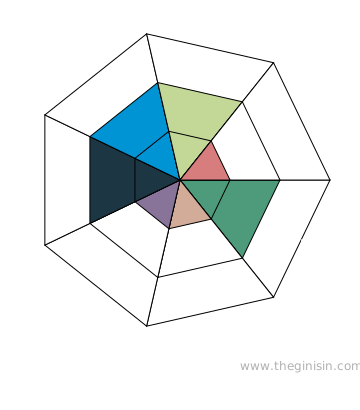
Inspired by the Fynbos, Geometric Cape Dry Gin starts with seven of the most classic gin botanicals ands adds Agathosma betulinam leaves, better known as Buchu, to a neutral grape base distilled from grapes by Mullineux Winery. From base to botanical, Geometric Cape Dry Wine has been around since 2017, acting as a testament to the staying power of South African gin.
Tasting notes
Aroma: Spice forward, with cardamom, pepper, delicate juniper and a hint of camphor. A hint of hawthorn berry lies just beneath lending it a round, complex aroma. As it warmed on my desk, while writing this, a note of cinnamon began to emerge.
Flavor: Juniper lays a foundation with green and piney facets, but buchu has a loud presence on the palate— cardamom combines with hints of currants, bergamot, and a touch of minty/camphor. The minty camphor note blossoms as the palate shifts towards the back of the throat, giving hints of eucalyptus, a warm woody stab of cinnamon and a pleasant nuttiness.
Finish: Moderately warm and fairly dry— hints of pecan, camphor and the faintest hint of Grappa. The grape spirit is soft throughout with a pleasant warmth— it’s only here in the distant echoes of the finish that it faintly pops through adding a pleasant note.
Cocktails and suggested serves
Complex and evolving, Geometric Cape Dry Gin changes with subtle shifts in temperature— from the icy chill to the delicate warmth of your hand, it’s an ideal choice for a Dry Martini with either twist or olive.
Mixed, I think it pairs well with soda, tonic, or even juice. The latter will even highlight the subtle berry and citrus notes that come from the buchu, while contrast sharply with the cool hints of menthol and citrus on the finish.
As with many gins with a eucalyptus/camphor note, mixing it’s best to work with it. Pairing it with things like Green Chartreuse will harmonize with it, while in some drinks like a Tom Collins the lemon/mint note might be a bit challenging.
Geometric Cape Dry Gin mixes well, though is really at its best alongside a bitter note— whether quinine or otherwise.
Overall, Geometric Cape Dry Gin
Geometric Cape Dry Gin doesn’t wow you with 20 local ingredients— it has a tightly focused perspective that lends a South African riff on the traditional gin formula. However, it does so without tasting “exotic” or “unusual.” It brings familiar notes and helps create a mixable, balanced gin that would be at home— at home— or in any bar program.
Geometric gin is a very smooth pour. I prefer my gin on the rocks and when a twist of lime/lemon is added to Geometric it truly shines. This is a rock solid #2 behind my favorite, Brooklyn Small Batch.